

Hello friends!
This week, I want to share a story about an object that carried Christmas for me long before I understood why - the cranberry-coloured tin filled with Christmas.
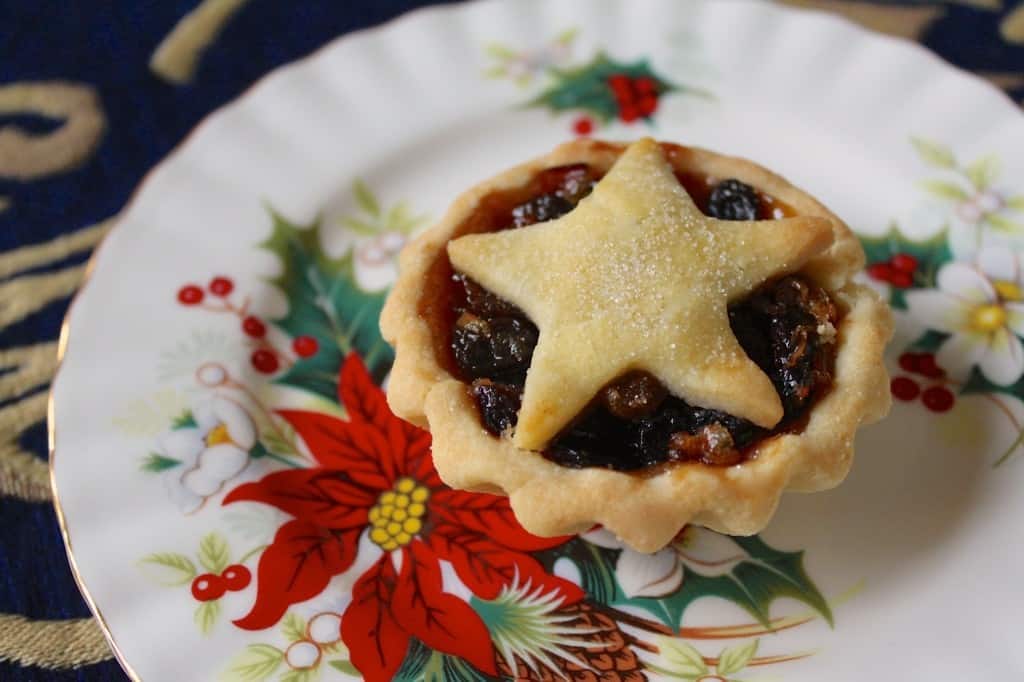
In my grandmother’s home, mincemeat tarts weren’t just a seasonal treat -
they were a tradition tucked inside a curious tin.
It wasn’t a baking tin at all.
It was an old film reel holder, deep cranberry in colour -
something my great-grandfather once used at his movie theatre.
(Almost certainly covered in lead paint… yikes.)
But to me,
It was a treasure chest of Christmas.
Inside that metal circle lived:
• fluted pastry edges
• warm spices
• sweetness folded into care
• comfort tucked into every bite
My grandma made mincemeat tarts every December.
Then my mom did.
Then I did.
Even when I became the only one in my family who still loved them,
I kept baking them anyway.
(They still don’t like them. I’ve made peace with that.)
I won’t bake a batch this year,
but I will keep my eye out for a shop that has one -
because I want to savor at least a single tart
and quietly honour the lineage of flavour that found me.
When I think of that cranberry-coloured tin, I don’t just think of dessert.
I think of:
her hands in the dough
her joy in feeding the people she loved
her way of turning food into comfort
Objects like this don’t just hold memory.
They keep rituals alive.
A recipe can be a bridge across generations -
and this one leads straight back to her.
A Note on Heritage & Mincemeat
Mincemeat itself is a traditional English Christmas food, widely loved throughout southeastern England and northwestern Europe - regions that show up strongly in my own DNA story.
While it isn’t distinctly Celtic in origin, it belongs deeply to the British Isles holiday table, where English, Irish, Scottish, and Welsh traditions often braided together over generations.
And this is something I keep noticing as I follow my heritage thread:
Not every ritual needs to be “purely” Celtic to belong.
Many of our traditions are layered - shaped by geography, migration, and family life.
What matters is not where something began,
but how it was loved and carried forward.

A New Ritual: A Recipe for Intention
At this month’s Kitchen Table gathering, I shared something a little different -
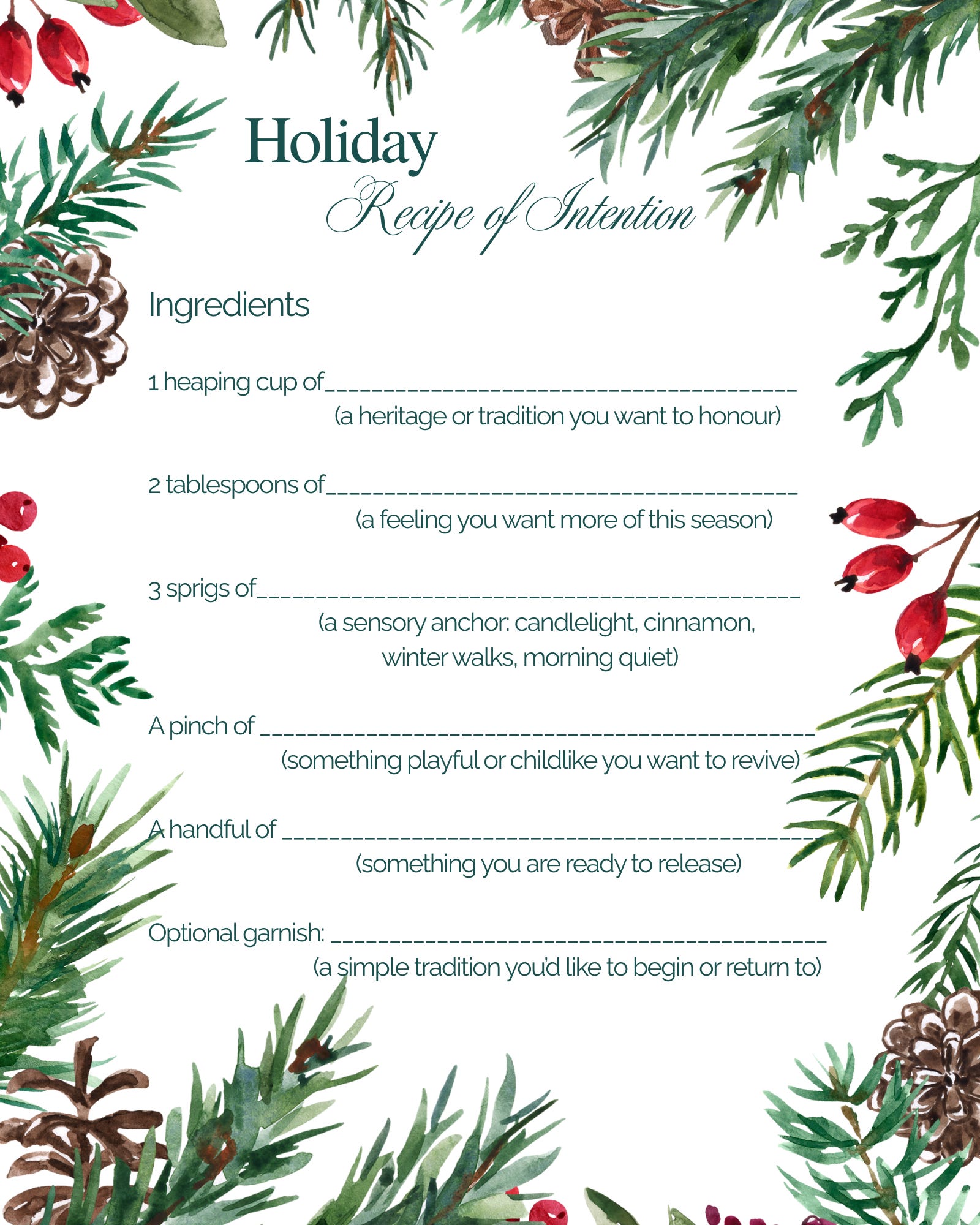
a Recipe for Intention.
It isn’t meant to be baked.
It’s meant to be felt.
This simple ritual invites you to treat intention the way our ancestors treated food:
with care
with presence
with attention to what truly nourishes
Just like the recipes we’ve inherited, this one is about gathering what matters, releasing what doesn’t, and tending to the season you’re in.
I’ve included the Recipe for Intention card as a PDF with this newsletter so you can print it, keep it, or return to it whenever you need a gentle pause.

How to Use the Recipe for Intention
Find a quiet moment during your day
Light a candle if you wish
Read through the card slowly
Fill in each section with honesty, not perfection
Let it be a conversation with yourself, not a task to complete
You might return to it once…
or you might come back to it again and again as you move through this season.
Reflection Invitation
What recipe, ritual, or seasonal habit feels like home to you?
It could be something you make.
Something you repeat.
Something you’ve quietly carried forward without realizing why.
What does it nourish - in you, and in others?
Gentle Creative Invitation
If you feel called, choose one small way to honour it this week:
Make the recipe
Write its story
Place the object somewhere visible
Or create a simple “recipe card” for a ritual you want to keep
Next week, we’ll gently shift from looking back to looking forward -
exploring what light we want to carry onward, and what we hope to pass down.

Also, I love mince tarts too, 🥰.
Grandma painted that film reel container with elevator paint. Grandpa was the agent for National elevators, and large pails of that paint must have been a perk of the job. Everything from cookie containers to the basement floor and cement patio at their home was "elevator red". Almost everything else was pink!